Now Aaron’s sons, Nadab and Abihu, each took his censer, put fire in it, and laid incense on it; and they offered unholy fire before the Lord, such as he had not commanded them. And fire came out from the presence of the Lord and consumed them, and they died before the Lord. Leviticus 10:1
The U.S. Election is now over as we await recounts and state certifications and it is very apparent that there are two different visions for the country. Many people I know are lamenting and in despair while others I know are ecstatic. The range of emotions is all over the place.
While I myself am not despairing, I am sorrowful, but remain at peace. I have peace because Jesus is King. I am sorrowful because abortion is the preeminent issue and the blood of the innocent cries out from the ground. I have actually seen Catholic friends say that overturning Roe v Wade without structures in place to help the women (which there already are) would be dangerous. As if the murder 2362 babies a day isn’t the most dangerous thing I have heard of. I can’t think of anything that kills more people worldwide than abortion, in fact it kills more than all other causes of death combined. I wonder if they would say the same about slavery? That it would have been dangerous to abolish it without structures in place to help the people of the South. When you dehumanize one group of people because of the troubles of another, and you use the law to do so, you reap evil. The justification of evil makes me angry and sorrowful. But I am not in despair. Because Jesus Christ is King and I realized long ago that politics is not what my faith is in.
Throughout all of this people have sent me prophecy after prophecy because of everything we see unfolding in the world. This coming November 18 is the 100 year anniversary of Russia legalizing abortion. I do read prophecy. I do not despise it as scripture tells us. But as I observe things unfold in the world and remain watchful, something gnaws at me about our search for what is going to happen and how it will happen. And God speaks to me too about the things to come and asking me to trust totally in the midst of unknowing.
These grave immoral things we see happening like abortion and the redefinition of marriage are indeed signs of the times and they are abject intrinsic evil. They attack marriage and the family and it was Christ himself who defined marriage. But these are not the worst evils. God makes it clear to that the worst evil is breaking the first commandment. In fact, the first 3 commandments all have to do with our relationship with God and they are listed first because when your relationship with God isn’t right, all those other commandments that follow the first 3 will be broken as well, because without right relationship with God you will never have right relationship with one another. We see this in our society and it is why those first three and breaking them is so gravely evil.
This is about worship.
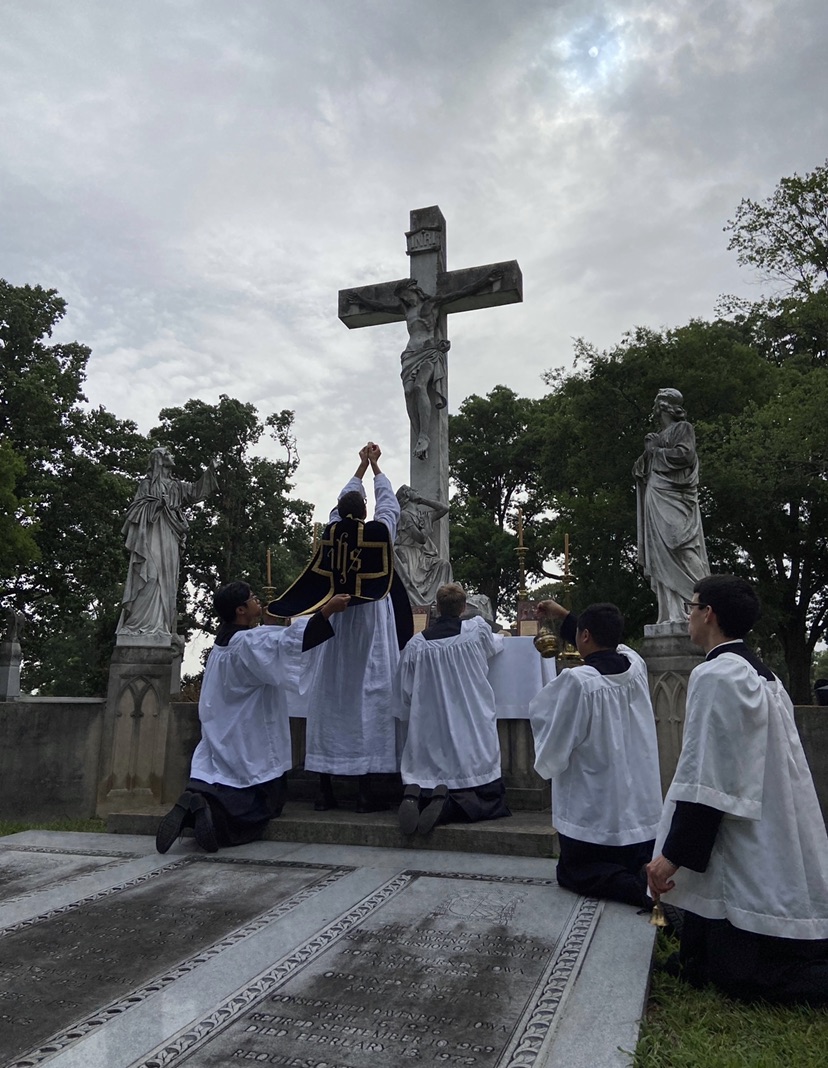
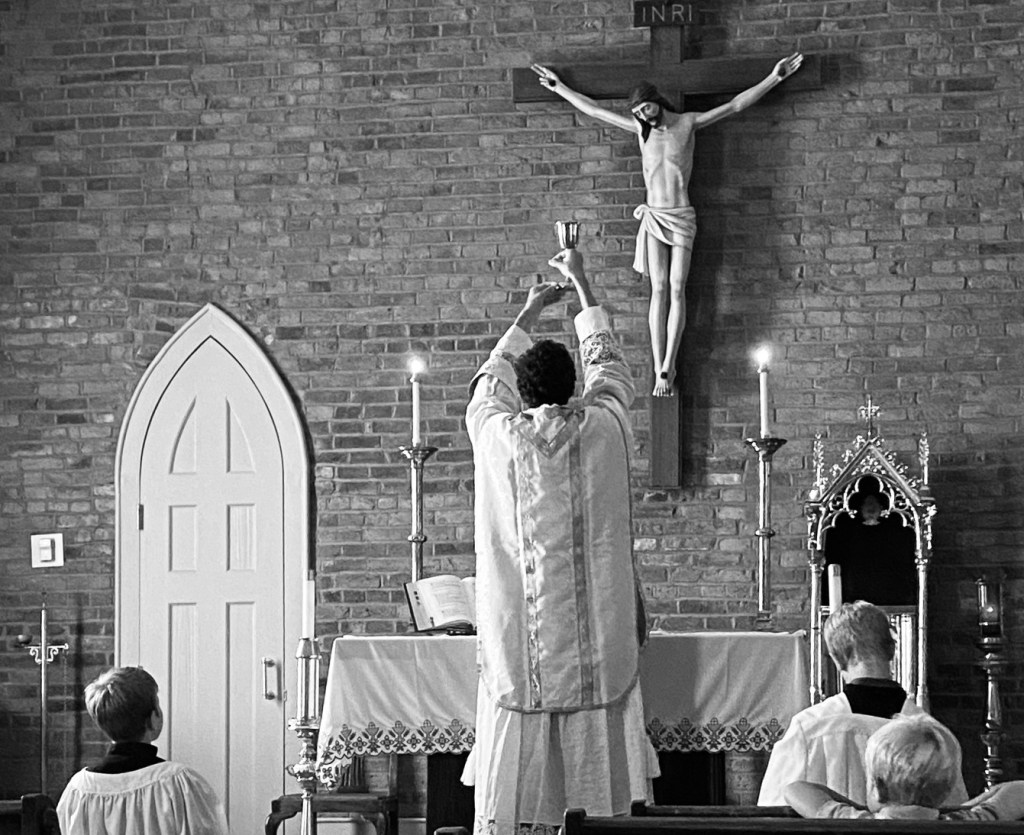
If you want to know how the world is doing you need look no further than the Mass. The Mass is where heaven and earth collide, so it is here we will get the sense of prophecy unfolding.
Before Christ’s second coming the Church must pass through a final trial that will shake the faith of many believers. The persecution that accompanies her pilgrimage on earth will unveil the “mystery of iniquity” in the form of a religious deception offering men an apparent solution to their problems at the price of apostasy from the truth. The supreme religious deception is that of the Antichrist, a pseudo-messianism by which man glorifies himself in place of God and of his Messiah come in the flesh. CCC 675
Before I continue I want to recall the story of Nadab and Abihu from the book of Leviticus. These were Aaron’s sons. They were Priests. Scripture tells us that they offered unholy fire before the Lord. Some translations call it strange fire. This strange fire would have been something that didn’t belong, something unconsecrated. Something that God did not command them to offer. And it killed them. They were consumed by this unholy fire. Later in the chapter we see God speak to Aaron;
You are to distinguish between the holy and the common, and between the unclean and the clean; and you are to teach the people of Israel all the statutes that the Lord has spoken to them through Moses. Leviticus 10:10-11
The Priests are to know the difference between what is holy and what is not, and they are to teach the people. Unholy offering brings death. Do we not see all around us people being consumed by unholy fire? And what of the Mass itself?
I have written before about how the Mass is the center of the world and how I thought perhaps the Eucharist would be removed. It is here that I sense we see prophecy unfold.
Within 5 months of Pachamama being brought to the Vatican gardens and to ceremonies inside the church we were shut down world wide. Strange Fire. Now we find ourselves at Masses with hand sanitizer on the altar. Strange Fire. We were dispensed from the 3rd commandment by the authority of the church. Strange fire to dispense of a command in totality. Instead of repenting we went the way of the world.
None of these incidences rise to the level of what Nadab and Abihu did. But they paved a pathway. And I don’t see the closing of the churches in March as the removal of the Eucharist, though I suppose you could look at it that way. But what I look for is if we were to see an abomination on the altar at Saint John Lateran or Saint Peter’s, the church will seem crucified. I don’t foresee that God would allow a Pope to make an offering like this from the main altar. The reason (and of course I don’t know the mind of God) but the reason I think this is because the Papacy itself, as the chair of Peter, regardless of who sits in it, has a measure of protection from heaven – because Christ is actually the head and the gates of hell shall not prevail. But these are the kinds of signs I look for, the decimation of the Mass. It becomes a place where a lot of Catholics would walk away because the Kingdom will look lost, much the way the disciples ran away from the Passion. But it will never be lost. God made us a promise. His bride will rise purified.
For us personally and the little control we have, it does also boil down to worship. Knowing who it is you are receiving and receiving Him with awe and wonder and reverence in your body and in your heart – this is where we should be focused. This is our purification. When we worship with all our heart, mind and soul, our eyes are open to the truth and to the signs of the times and our will is in union with the will of God. If you are unable to get to Mass your life can become an act of true worship. Living in virtue and praising God. You do what you can do and ask God, who is your Savior, to lift up the rest.
People may wonder, well why would God be so cruel as to get mad at our worship? This kind of mindset forgets who God is. God is LOVE.
Anyone who does not love does not know God, because God is love. 1 John 4:8
So when you worship at the altar of something other than true love, it is you who worships death. You have chosen something else over love. You choose something created over the Creator. You choose fear over the Creator. The laws are to tame our desires and passions – so as to align them with the will of God. It’s about growing in virtue. Do we even remember what the virtues are? All of this, everything we are going through is about our own purification, about bringing us to true love. About bringing us in alignment with the Divine Will. Where there is no corruption, no twisting, no tainting, no skewing, no ideology other than the pure love of God.
We are being called to a deeper purification. This isn’t about condemnation. This is about purification which does not judge the interior of others, but where we ardently pray for them; one where we seek the salvation of our own souls and the souls of others. The anger I see, even from people who know truth, that can eat you alive. Pray instead with your sorrowful Mother.
I didn’t write this post to leave anyone disheartened but instead to refocus us. Let the emotion of the election go and give it to God. Of course keep praying, but give to God what belongs to God, which is all authority and right worship. Focus on your own interior, growing in virtue and loving the person right in front of you. Get to know the doctrines of your faith if you don’t know them already. Go to Mass if you can and be as reverent as you can possibly be recognizing that every single particle of the Eucharist is Christ Himself and should not be abused. Read Scripture. Pray the Rosary. Live in the Peace of God knowing He has a plan. Shalom.
My daughter, each virtue is a heaven that the soul acquires. Therefore, as many virtues as she acquires, so many heavens does she keep forming, and these heavens defeat all human inclinations, destroy that which is earthly, and make the soul wander through the purest auras, through the holiest delights, through the celestial fragrances of the highest good, anticipating for her part of the eternal joys. Jesus to Servant of God Louisa Piccarreta Volume 9 Book of Heaven